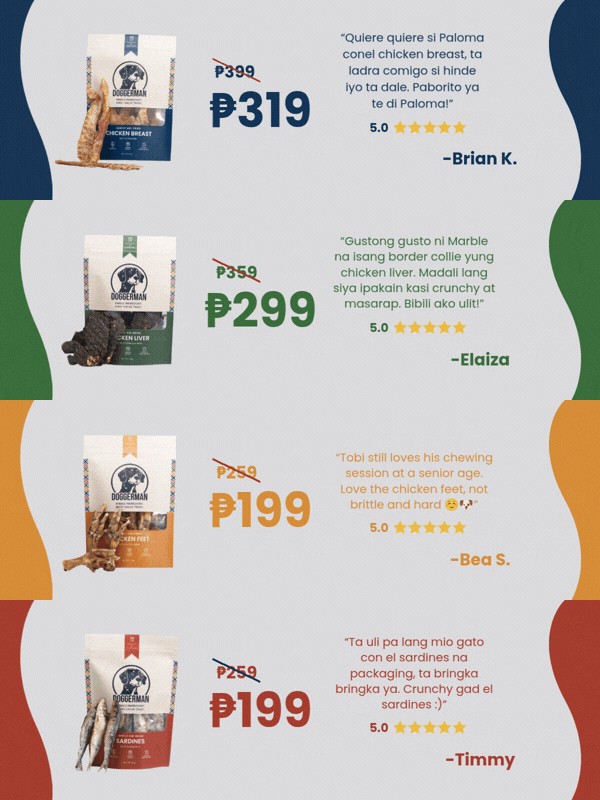
When you pick up a bag of dog treats, you probably look at the ingredient list first.
Chicken. Beef. Liver. Sardines.
But there is another question worth asking:
How was that ingredient prepared?
The same chicken can become a raw treat, a cooked treat, or an air-dried treat. Each preparation method changes the food in different ways, from moisture and texture to storage and food safety.
So, which one is best?
The honest answer is: there isn’t one processing method that is automatically best for every dog or every household.
What matters is understanding what each method involves, how the finished product was made, and whether the treat is appropriate for your dog.
Let’s break down the differences.
What Are Raw, Cooked, and Air-Dried Dog Treats?
The easiest way to understand the three is to look at what happens to the ingredient before it reaches your dog’s bowl.
Raw Dog Treats
Raw treats are made from animal ingredients that have not undergone a cooking or other validated pathogen-control process before being fed.
The appeal is easy to understand. Raw treats involve minimal processing, and the ingredient remains close to its original state.
But “raw” does not automatically mean safer or more nutritious.
Raw animal products can carry harmful bacteria such as Salmonella and Listeria. The U.S. Food and Drug Administration (FDA) notes that raw pet food is more likely than processed pet food to contain harmful bacteria, while the American Animal Hospital Association (AAHA) does not advocate or endorse feeding pets raw or dehydrated non-sterilized animal-origin foods, including treats.
Raw treats also generally require refrigeration or freezing and more careful handling. That does not mean every raw product is identical, but it does mean food safety needs to be taken seriously.
Cooked Dog Treats
Cooked treats are exposed to heat during preparation.
One of the biggest benefits of cooking is that an appropriate heat treatment can reduce or eliminate harmful bacteria when the right temperatures and processing controls are used.
Cooking can also make treats easier to handle than fresh raw meat and may extend storage life, depending on the product, packaging, and manufacturing process.
But “cooked” can describe many different products.
A gently cooked piece of chicken is very different from a highly processed biscuit containing meat, starches, flavorings, and preservatives.
The ingredient list still matters.
Heat can affect nutrients differently depending on the ingredient, temperature, duration, and cooking method. That is why it is difficult to make a blanket statement that cooking either “destroys all the nutrients” or automatically makes a treat nutritionally inferior.
Air-Dried Dog Treats
Air-drying takes a different approach.
Instead of keeping the ingredient fresh and moist, or turning it into a cooked formulation, air-drying gradually removes moisture from the ingredient.
The result is a lighter, drier treat that is generally easier to store and handle than fresh raw meat.
This makes air-drying particularly interesting for dog parents who want a dry treat that can remain focused on the original animal ingredient.
But there is an important distinction:
Drying and cooking are not automatically the same thing.
Removing moisture makes food less hospitable to microbial growth, but dehydration alone does not guarantee that harmful bacteria have been eliminated. The safety of an air-dried treat depends on factors such as the drying process, temperature, time, water activity, sanitation, handling, packaging, and prevention of contamination after processing.
So when you see “air-dried” on a package, don’t stop there. Ask how it was made.
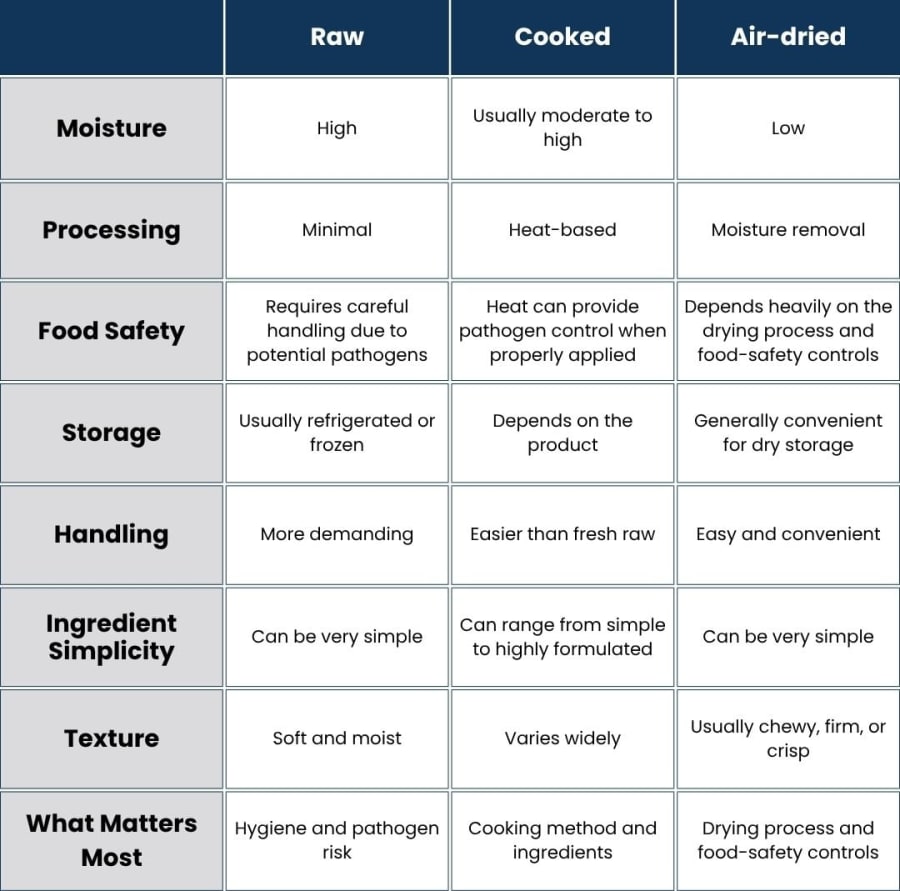
The table highlights something important: the processing method tells you part of the story, not the whole story.
How Does Processing Affect Nutrients in Dog Treats?
This is where the conversation can get confusing.
You may have heard that raw food “preserves all the nutrients” while cooking “destroys nutrients.”
The reality is more nuanced. Processing can affect nutrients differently depending on the ingredient, temperature, duration, moisture, and overall formulation. Some nutrients are sensitive to heat, while other changes can affect digestibility and nutrient availability.
Research in dogs has found differences associated with processing methods, but this does not establish a universal ranking where raw is always best, cooked is always best, or air-dried is always best.
And there is another important point when we’re talking about treats:
Treats are treats.
They are meant to complement your dog’s main diet, not replace a complete and balanced food. The World Small Animal Veterinary Association (WSAVA) recommends that treats make up no more than about 10% of a dog’s daily calorie intake.
So instead of asking: “Which processing method preserves the most nutrients?”
A more useful question is: “What is actually in this treat, how was it made, and can I confidently feed it to my dog?”
Is Air-Dried Better Than Raw?
Not automatically.
Air-drying can offer a practical format between fresh raw meat and more heavily formulated treat products. It reduces moisture, makes the treat easier to store, and can allow the original ingredient to remain the focus.
But air-dried products should not be treated as automatically safe simply because they are dry.
The drying process, temperature, duration, water activity, sanitation, packaging, and prevention of post-processing contamination all matter.
In other words, “air-dried” tells you how moisture was removed. It does not tell you everything about how safely the product was made.
That is why transparency from the manufacturer matters.
How to Choose Dog Treats: 5 Things to Look For
1. Read the ingredient list. A simple ingredient list makes it easier to understand exactly what you are feeding. If the front of the package says “chicken,” but the ingredient list contains a long collection of flavors, fillers, sweeteners, and other ingredients, take a closer look. The simpler the ingredient list, the easier it is to know what your dog is actually eating.
2. Understand how the treat was made. “Raw,” “cooked,” and “air-dried” tell you something, but not everything. Look for manufacturers that are transparent about preparation, sourcing, food-safety practices, packaging, and storage recommendations. A trustworthy treat brand should be comfortable answering reasonable questions about its products.
3. Consider storage requirements. Fresh raw treats generally require more careful refrigeration or freezing. Dry treats are usually more convenient, but they still need proper storage. Keep them according to the manufacturer’s instructions and pay attention to the product’s packaging and shelf-life guidance.
4. Think about the treat’s purpose. Not every treat needs to do the same job. A small, easy-to-break treat can be useful during training. A firmer chew may be suited to a longer chewing session. A high-value meat treat may be useful when you need your dog’s full attention. The right treat is partly the one that fits what you are actually trying to do.
5. Don’t forget portion size. Even a simple, high-quality treat is still a treat. Treats should complement your dog’s regular diet rather than become a major source of daily calories. WSAVA recommends keeping treats to no more than about 10% of a dog’s daily calorie intake. If your dog has a medical condition, food allergy, dietary sensitivity, or is on a veterinary-prescribed diet, speak with your veterinarian about appropriate treat choices.
Which Type of Dog Treat Should You Choose?
Raw, cooked, and air-dried treats each offer a different approach.
Raw: Keeps processing to a minimum, but comes with greater food-safety and handling considerations.
Cooked: Uses heat, which can provide pathogen control when properly applied, while the nutritional and ingredient profile depends on how the product is formulated and prepared.
Air-dried: Offers low moisture, convenient storage, and an ingredient-forward format, but the quality and safety of the finished treat depend heavily on the manufacturing process.
So rather than asking: “Which processing method is the healthiest?”
Try asking: “What is actually in this treat, how was it made, and can I confidently feed it to my dog?”
That is a much better starting point.
Because choosing a dog treat should not require a degree in food science.
It should simply require knowing what you’re feeding.
The Doggerman Approach
At Doggerman, we believe treats should start with the ingredient itself.
Our treats are made from single ingredients, including chicken breast, chicken liver, chicken feet, and sardines. We gently air-dry these ingredients without adding fillers, artificial flavors, or unnecessary extras.
The goal is simple: real ingredients, clearly presented, so dog parents can reward their dogs with confidence.
Because sometimes, the simplest treat is the easiest one to understand.
Feed with Confidence. Feed Doggerman.